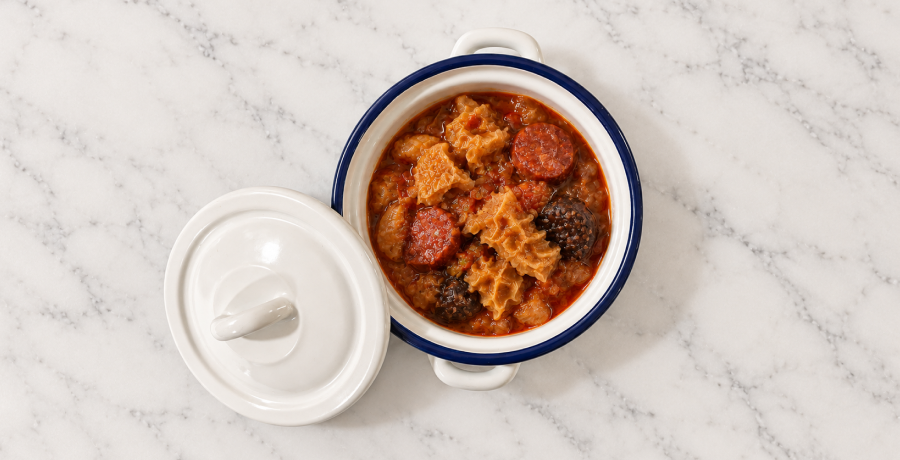
Talking about Madrid cuisine means talking about traditional stews, lively bars, sharing plates and dishes that have become part of everyday life in the Spanish capital. Madrid has developed a recognisable food culture around traditional recipes, time spent around the table and a way of eating in which the company can be just as important as the food itself. At Museo del Jamón, this relationship with the city dates back to 1978.
Jamón and Ibérico products naturally play a central role, but Madrid’s culinary traditions also include tapas, sandwiches, stews and classic dishes. From cocido madrileño to callos or Spanish omelette, discovering Madrid also means sitting down and tasting some of the flavours that have accompanied generations of local residents.
What Makes Madrid Cuisine Special?
Madrid has received culinary influences from many parts of Spain while developing a food culture with a strong identity of its own.
Traditional recipes include substantial stews, spoon dishes, tapas, sandwiches and simple plates designed to be shared.
Food is also closely connected to social life in Madrid. Bars, traditional taverns, terraces and restaurants are all part of the way people experience the city.
Discovering the local food culture therefore means more than trying one particular dish. It can be a plate shared with friends, a quick stop at the bar or a long meal around a table.
This approach is part of the experience at the different Museo del Jamón locations, where bar areas, dining rooms, charcuterie and traditional local flavours come together.
Cocido Madrileño: One of Madrid’s Great Classics
Few dishes are as strongly associated with the capital as cocido madrileño.
Chickpeas, vegetables, meats, cured meats and broth come together in a traditional preparation that has occupied an important place on Madrid tables for generations.
One of the most recognisable aspects of the dish is the way it can traditionally be served in different stages. Soup comes first, followed by chickpeas and vegetables and then the meats and cured meats.
Beyond the ingredients themselves, cocido madrileño also represents a slower way of enjoying a meal, with enough time to sit, eat and share the experience.
It is a perfect example of the importance that spoon dishes and traditional stews continue to have within Madrid cuisine.
Madrid-Style Tripe and Traditional Stews
Callos a la madrileña is another dish closely associated with the city.
This intensely flavoured stew is historically connected to traditional, resourceful cooking and has become one of the most recognisable recipes associated with old Madrid taverns.
It is the kind of dish that invites you to slow down, enjoy the sauce and experience a style of cooking that has been passed down through generations.
Together with cocido madrileño, it represents the heartier side of local cooking: recipes with history and strong flavours that continue to appear in restaurants and bars throughout Madrid.
Spanish Omelette, Jamón and Sharing Plates
Madrid’s food culture is not only about stews. Much of the experience takes place at the bar or around a table filled with several dishes for everyone to share.
Jamón, cheese, croquettes and Spanish omelette all fit naturally into this more informal way of eating.
Spanish omelette is enjoyed throughout Spain, but it has an important place in Madrid’s bars, set menus and tapas culture. It can be served as a tapa, a portion to share or even inside a sandwich.
Jamón is particularly important at Museo del Jamón. Since the beginning, it has been at the heart of the concept, alongside cured meats, charcuterie, traditional bar culture and dishes designed to be enjoyed together.
Ordering several plates for the table is also an easy way to discover different flavours during the same meal.
The Calamari Sandwich: A Madrid Classic
Few simple dishes are as closely associated with central Madrid as the calamari sandwich.
The idea is straightforward: battered and fried calamari served inside bread. Yet this simple combination has become one of Madrid’s best-known culinary symbols.
The Plaza Mayor area has a particularly strong connection with the tradition. Eating a calamari sandwich and then continuing to explore the streets of central Madrid is one of those simple experiences that visitors have come to associate with the city.
Museo del Jamón Plaza Mayor is located at numbers 17 and 18 of the square and offers a bar, indoor dining rooms and an outdoor terrace.
Food That Brings People Around the Table
One of the most enjoyable things about Madrid’s traditional food culture is how naturally it brings people together.
It might be a family meal, a gathering with friends, dinner after work or a stop during a day exploring the capital.
Tapas and sharing plates allow everyone to try different things. Traditional stews encourage a slower meal. Jamón and cured meats can provide an easy starting point before other dishes arrive at the table.
There is no single way to experience the city’s food. That variety is part of what makes it interesting.
Would you like to discover the flavours of Madrid around the table?
Find your nearest Museo del Jamón and explore its restaurants
La Tasca and the Flavours of Traditional Madrid
Close to Plaza Mayor, on Cava de San Miguel, you can also find La Tasca del Museo.
This Museo del Jamón concept focuses particularly on the spirit of traditional Madrid, with a relaxed offering that includes tostas, gildas, vermouth and hearty stews.
Its location on one of central Madrid’s historic streets adds to the experience. After exploring Plaza Mayor and the surrounding area, sitting down in a traditional-style tavern connects naturally with the way generations of people have enjoyed the centre of the city.
La Tasca also maintains the essence of Museo del Jamón through its selection of Jamón and Ibérico products, together with its bar and two dining rooms.
Where to Enjoy Traditional Flavours in Madrid
Museo del Jamón has several locations across the capital, including Plaza Mayor, Gran Vía, Paseo del Prado, Carrera de San Jerónimo, Calle Mayor, Avenida de Córdoba and Poeta Joan Maragall.
Each location has its own characteristics. Some offer terraces, others have several dining rooms, while the connection with Jamón, Ibérico products, traditional bar culture and Madrid flavours remains central throughout the different establishments.
Museo del Jamón Paseo del Prado was the original location, established in 1978. It is also close to some of Madrid’s best-known cultural attractions.
Locations in Gran Vía, Plaza Mayor and other central areas make it easy to combine a meal with a walk through some of the most recognisable parts of the city.
Discover Madrid Through Its Food
Enjoying Madrid cuisine is another way of understanding the capital. Its dishes tell stories about homes, taverns, bars and people coming together around the table.
Cocido madrileño represents the slower and more comforting side of traditional cooking. Madrid-style tripe keeps a deeply local recipe alive. Spanish omelette, Jamón and sharing plates reflect the city’s social way of eating, while the calamari sandwich shows how a simple recipe can become one of Madrid’s best-known symbols.
Museo del Jamón brings many of these flavours together through a story that began in Madrid in 1978 and continues today across its different locations.
If you want to experience Madrid through its food, choose your Museo del Jamón and enjoy a table filled with flavours connected to the city.