Iberian ham is much more than just food; it is a key element of Spanish gastronomy and a product with centuries of history. Its unmistakable flavor, meticulous production process, and exclusivity make it a true culinary treasure.
In this article, we reveal some fascinating facts about Iberian ham that will make you appreciate it even more.
1. Only One Type of Pig Can Produce Iberian Ham
Iberian ham comes exclusively from the Iberian pig, a breed native to the Iberian Peninsula. What makes it special is its ability to store fat within the muscle, giving it its characteristic texture and juicy flavor.
2. Not All Ham Is the Same: The Categories of Iberian Ham
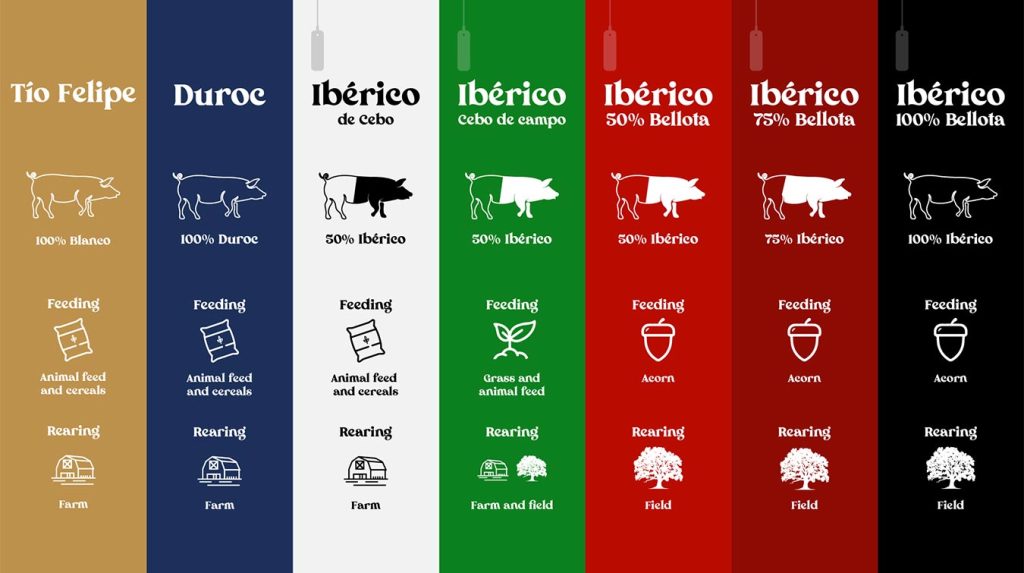
There are different categories of Iberian ham, classified according to the pig’s diet and its level of purity. These are identified by colored labels:
- Black Label: 100% Iberian Bellota Ham (the most exclusive).
- Red Label: Iberian Bellota Ham, but from crossbred pigs (50% or 75% Iberian).
- Green Label: Iberian Cebo de Campo Ham, fed on natural feed and pasture.
- White Label: Iberian Cebo Ham, raised on feed in farms.
3. A Curing Process That Can Last Up to 5 Years
Iberian Bellota ham is cured artisanal-style in natural drying rooms and cellars for a minimum of 36 months, and in some cases, up to 5 years. During this period, a slow transformation enhances its unique aroma, flavor, and texture.
4. The Dehesa: The Secret to the Best Ham
Iberian pigs raised to produce Iberian Bellota ham live in the dehesa, a unique ecosystem where they feed on acorns, grass, and roots during the montanera (the fattening period). This type of diet is essential for the quality of the ham, as acorns provide oleic acid, which makes the fat healthier and gives the ham its characteristic flavor.
5. A Perfect Cut Makes a Difference in Flavor
Slicing Iberian ham correctly is essential to enjoy its full flavor and texture. A thin, even cut enhances its sensory properties, allowing it to melt in your mouth.
Want to learn more? Check out our guide on how to cut ham properly.
6. Iberian Ham Is a Healthy Food
Despite its reputation as a fatty product, Iberian Bellota ham contains healthy fats similar to those in olive oil, with a high percentage of oleic acid, which helps regulate cholesterol.
Additionally, it is rich in protein, iron, and B vitamins, making it a nutritious and beneficial food within a balanced diet.
7. Spain Is the World’s Largest Producer of Iberian Ham
Spain is the leading producer and exporter of Iberian ham, with Protected Designations of Origin (PDO) such as:
- Jamón de Jabugo (Huelva)
- Los Pedroches (Córdoba)
- Guijuelo (Salamanca)
- Dehesa from Extremadura
Each of these regions has distinct characteristics that influence the flavor and texture of the ham.
8. A Luxury Product in Global Gastronomy
Iberian Bellota ham is a highly sought-after delicacy worldwide, and its price can reach exorbitant figures. Some of the most exclusive hams have been sold for over €4,000 per piece.
Enjoy our 100% Iberian Bellota Ham, sliced, starting at just €21.00.
Find this ham and many more in our online store!
9. The Ham Bone Is Also Used
Nothing goes to waste when it comes to Iberian ham. The ham bone is used to make broths and stews, adding an incredible depth of flavor to traditional soups and Spanish stews.
10. Museo del Jamón: The Best Place to Enjoy It in Madrid
If you are a true Iberian ham lover and want to taste it in a traditional setting, Museo del Jamón is a must-visit in Madrid. In our restaurants, you can enjoy:
- Plates of freshly sliced Iberian ham
- Sandwiches and platters of Iberian cured meats
- Full menus with traditional Spanish recipes
Find your nearest restaurant and come enjoy the best Iberian ham.