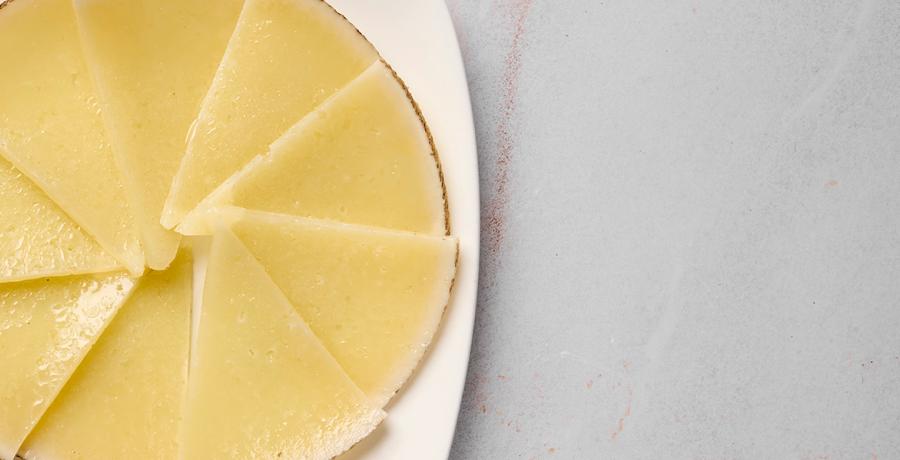
Sheep’s cheese is one of those products that instantly upgrades a table. It has a firm, satisfying bite, a flavour that lingers, and a personality that works beautifully on a board with charcuterie—or simply with bread and a drink. If you’re building a spread at home, it’s a smart “anchor” ingredient: it adds structure, contrast, and a clear Spanish identity.
At Museo del Jamón, sheep’s cheese is treated as more than an add-on: it’s part of the experience, alongside jamón and traditional flavours. The best part is that you don’t need to be an expert to pick the right one. Once you understand how curing changes taste and texture, choosing becomes easy: semi-cured for a gentler profile, cured for balance, aged when you want depth and intensity
In this guide, you’ll find the main benefits of sheep’s cheese—from flavour to tradition to nutritional value—plus practical serving tips and a few easy, no-fail buying options from the Museo del Jamón Online Store.
Flavour: why sheep’s cheese has such a distinctive character
The first benefit is obvious the moment you taste it: sheep’s cheese tends to be bold, expressive, and long-lasting on the palate. As it matures, it develops deeper notes, a firmer texture, and a more pronounced finish—exactly what many people want when they say they’re looking for “a cheese with character.”
Texture matters, too. Sheep’s cheese—especially when cured or aged—often slices cleanly and presents beautifully, which is why it’s such a natural fit for boards, tapas-style spreads, and sharing plates. Museo del Jamón highlights these differences across curing stages: the flavour evolves as curing increases, and the texture becomes firmer and more crumbly over time.
Tradition: curing is where sheep’s cheese transforms
If you want to choose confidently, think in curing levels. There isn’t just “one sheep’s cheese”—there are different experiences depending on how long it has matured.
Semi-cured: smoother, friendly, and versatile
Semi-cured is a great entry point. You still get the sheep’s cheese identity, but with a milder profile and a texture that balances firmness with a touch of creaminess. It works well for mixed boards, sandwiches, and everyday use.
A clear option in the Museo del Jamón shop is El Piornalego semi-cured cheese (3.3 kg approx)—described as balanced in flavour and texture, ideal for slicing or cubing.
Cured: the “sweet spot” between intensity and balance
Cured sheep’s cheese is where many people fall in love: deeper flavour, firmer bite, and a more defined finish without going to the most intense end of the scale. Museo del Jamón explains cured sheep cheese as matured around 4 to 7 months, developing stronger flavour and firmer texture.
If that sounds like your style, look at El Piornalego Cured Sheep’s Cheese (3.2 kg approx), which the product page describes as robust, firm, and more complex due to prolonged curing.
Aged: deep flavour and a more crumbly texture
Aged sheep’s cheese is for people who want the fullest expression: more intensity, deeper nuances, and a crumbly texture that feels almost “layered” as it breaks. In the Museo del Jamón store, El Piornalego Aged Sheep’s Cheese (3 kg approx) is presented as intense, robust, and complex, with deep nuances that develop over time.
Nutritional value: what sheep’s cheese brings to the table
Beyond taste, another benefit of sheep’s cheese is that cheese in general is nutrient-dense. Reliable nutrition sources commonly highlight cheese as a source of high-quality protein and calcium, and also note key micronutrients like vitamin B2 (riboflavin) and vitamin B12.
Protein + satisfaction
Cheese is frequently cited as a protein source, which can help make a snack or board feel more “complete.” The European Dairy Association notes milk, yoghurts, and cheeses as excellent sources of high-quality protein.
Calcium (and phosphorus)
Calcium is one of the standout nutrients associated with cheese. Harvard’s Nutrition Source includes calcium and protein among key nutrients in typical cheese servings, and the European Dairy Association also highlights calcium and phosphorus as part of dairy’s nutrient contribution.
B vitamins (B2 and B12)
Those B vitamins matter in everyday nutrition, and they’re repeatedly mentioned in dairy nutrition summaries. The European Dairy Association specifically lists vitamin B2 and B12 among the nutrients found in cheeses.
A practical note: cheese can also be relatively high in saturated fat and salt, so it’s best enjoyed as part of a balanced diet and portioned sensibly. The NHS explicitly flags that cheese can be high in saturated fat and salt, and Harvard notes sodium is often significant in many cheeses.
A helpful detail: aged cheeses are often lower in lactose
If lactose is a concern, the curing process can make a difference. Educational resources from university extension programs note that hard cheeses are generally lower in lactose and are often better tolerated, because most lactose is removed with whey during cheesemaking and what remains can be reduced through fermentation and aging.
(As always, tolerance is individual—if you have diagnosed intolerance, follow your clinician’s advice.)
How to serve sheep’s cheese at home: temperature, cutting, and pairings
Serving makes a huge difference—sometimes more than people expect. Museo del Jamón recommends a few simple habits that immediately improve flavour and texture:
Take it out of the fridge at least 30 minutes before serving so aromas open up and texture softens slightly.
Use the right knife and cut into wedges to keep the texture looking clean on the board.
For pairings, their wine guide leans into a simple idea: match intensity with intensity. Sheep’s cheese’s ability to evolve with curing is exactly why it pairs well across different wine styles—lighter pairings for softer cheeses and deeper wines for older ones.
- Semi-cured: usually goes very well with young and fruity white wines.
- Cured: pairs well with young red wines or aged wines.
- Añejo: ask for reserve reds or even fortified wines to balance the power.
What to buy at Museo del Jamón (easy picks by curing level)
If you want straightforward choices from Museo del Jamón, these three cover the full spectrum:
- Start mild and versatile: El Piornalego semi-cured cheese (3.3 kg approx)
- Go for balance and character: El Piornalego Cured Sheep’s Cheese (3.2 kg approx)
- Choose maximum depth: El Piornalego Aged Sheep’s Cheese (3 kg approx)
Pick your curing level and get it delivered from the Museo del Jamón Online Store.
If you want the full experience, visit Museo del Jamón in Madrid and keep an eye on Jamón Sessions for bingo shows, live music, and more.